

The History of Grand Chess Tour from 2015 by CEO Michael Khodarkovsky
As the Grand Chess Tour (GCT) enters its 11th edition, it has become a cornerstone of the professional chess world. With a $2 million prize fund and a reach spanning four continents, the tour is often described as a "well-oiled machine". In an exclusive look at the tour's history, CEO and Executive Director Michael Khodarkovsky shares the philosophy that has sustained this elite circuit for over a decade.
The 2014 Brainstorming Session
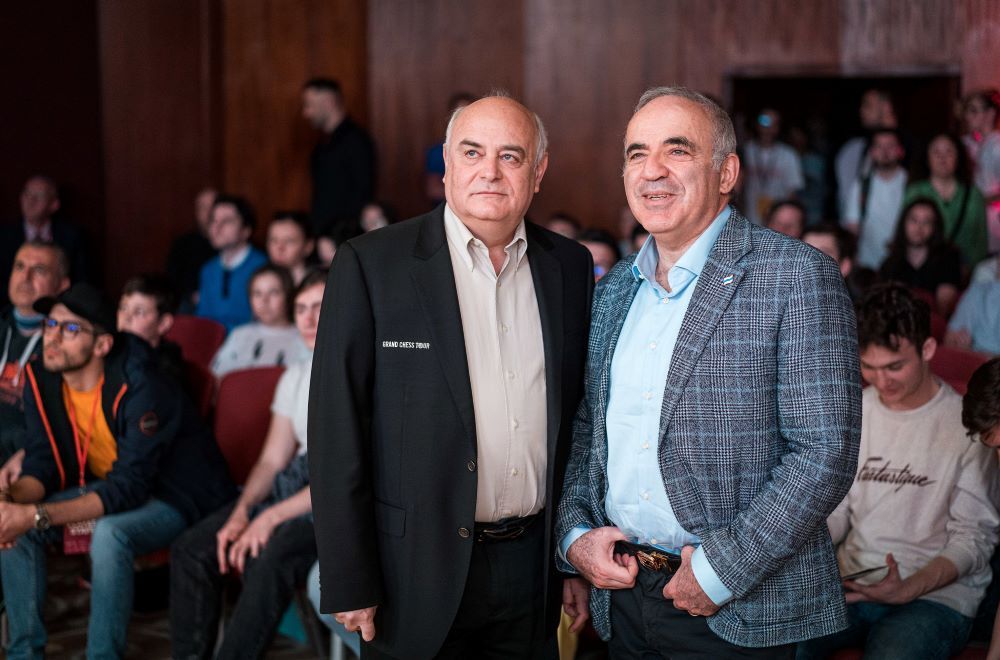
The GCT began as a shared vision between Michael Khodarkovsky and Garry Kasparov. "The beginning actually started in 2014 when Garry and I went to St. Louis and shared our idea with Rex Sinquefield and his team. It was basically brainstorming and Rex liked the idea and we started to prepare".
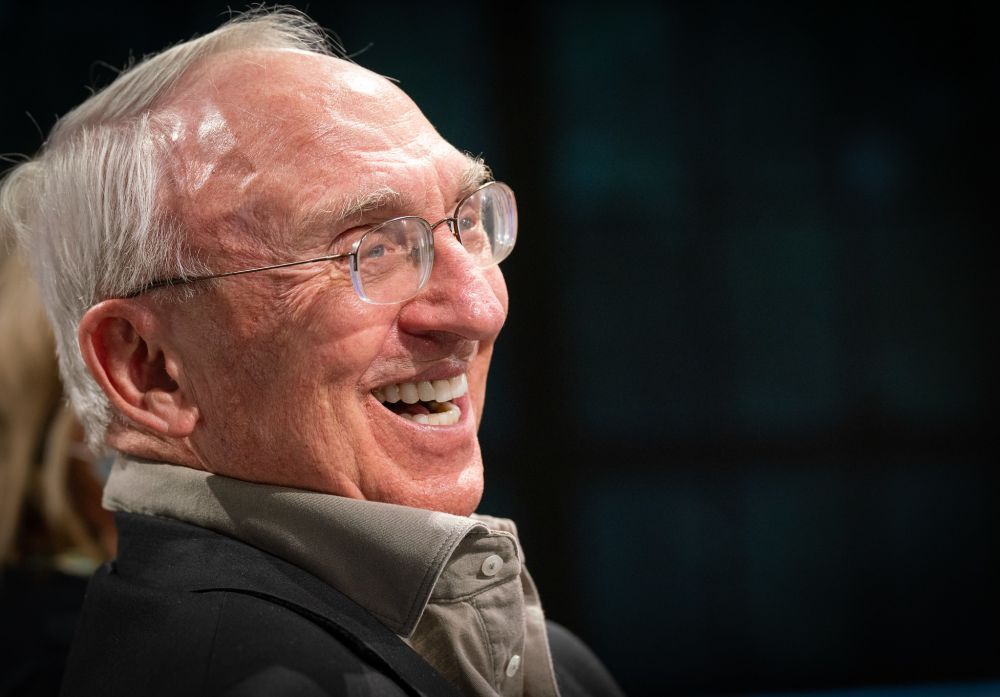
Launched in 2015, the tour initially featured three classical legs in Norway, St. Louis, and London. When the format shifted to include Rapid and Blitz in 2016 to accommodate new European organizers, the GCT found its modern, dynamic identity.
A Global Mission: "Uniting Minds"
While the elite competition draws headlines, the GCT is fundamentally a non-profit endeavor driven by the St. Louis Chess Club and the Superbet Foundation.

"The actual goal is outreach... to bring awareness of chess and chess in education. Of importance chess as cognitive tool in education - as as socially important tool for people to get together from different parts of the world."
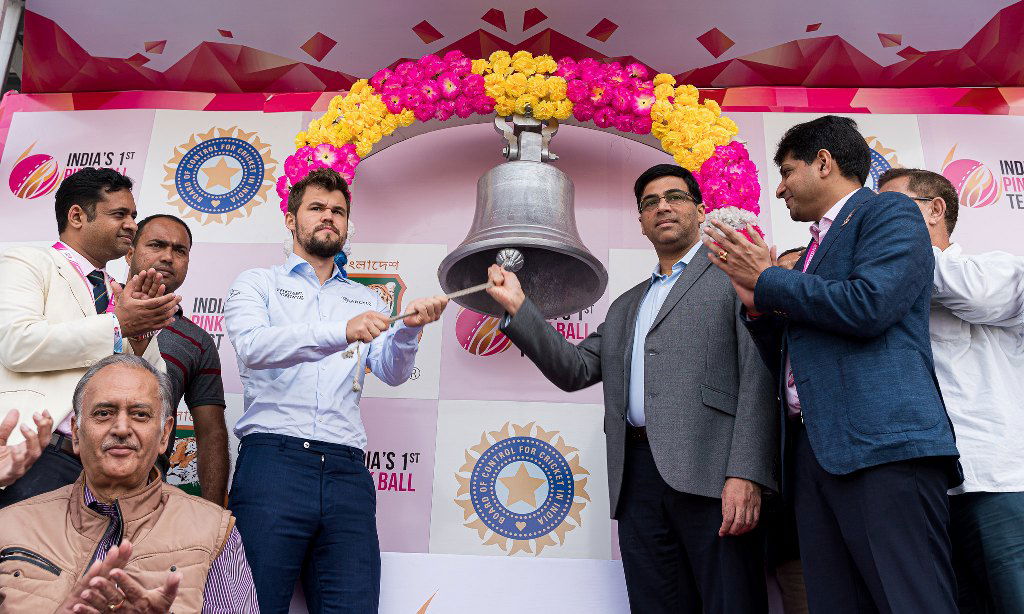
This mission has taken the tour to diverse locations, from Cote d’Ivoire to Kolkata. By incorporating side events like simuls and youth tournaments at every stop, the tour ensures that "the chess culture of that place also grows"
The Secret to Longevity: Respect and Stability
In a field where many tournaments struggle to maintain consistency, Khodarkovsky attributes the GCT's success to professional standards and a deep understanding of the players. Grand Chess Tour has an amazing prize fund for the players. This year the fund has increased to US$ 2 million. While the money is impressive, Michael knows that it is not the only element.
"First and foremost, we treat players with respect... I know what is required on one hand. And money not always bring happiness, as you know. Money comes and goes, but you need to have stability."

This stability is built on transparency. Unlike events announced at the last minute, the GCT plans years in advance. "We are already planning everything for 2027," Michael reveals, noting that they work to avoid collisions with other major organizers like FIDE or Norway Chess.
The Leadership Philosophy: Passion and Delegation
Michael Khodarkovsky’s own career - spanning roles as a coach, author, and official - is fueled by a singular drive. "The secret is passion," he explains. "If you are not giving your 100% to this project, nothing will come out."
A look at Michael's Wikipidea page shows the tremendous number of things he has achieved in his career. Here are a few:
Vice President of the FIDE Presidential Board
Founder and Director of International Chess School which conducts programs at public and private schools in New Jersey and New York.
President of the Kasparov Chess Foundation
Chair of International Affairs Committee of the US Chess Federation
US Chess Delegate to FIDE
Councilor of the FIDE Trainers Commission from 2004-2014
Member of Kasparov's coaching team for World Championships in 1995 and 2000 and during the matches with IBM in 1996 and 1997.
Head coach of the US Women's Team in 2004
Coach of several state, national, continental and world medalist students.
Winner of 2008 Scholastic Service Award by US Chess Federation
Author of chess books, manuals and articles.

Central to his management style is the ability to empower his team rather than micromanaging every detail. "I select the best people in their field and bring them together. I trust people with different skills who can deliver. And I am not micromanaging them."
This philosophy is evident in the inclusion of figures like Deputy Director Alexander Onischuk. Michael notes, "I always would like to bring new people," and describes Onischuk as "the right person to be with us on the Grand Chess Tour for many more years."

The Driving Force of Garry Kasparov
The tour’s existence is inextricably linked to the involvement of the 13th World Champion. "Garry is one of the co-founders... and without Garry this Tour wouldn't be possible," Michael states. Kasparov remains a "driving force" who actively secures sponsorship and remains involved in the tour's day-to-day trajectory.

The Next Decade
The Grand Chess Tour celebrated its first decade with finals in Brazil. Now the 11th edition has begun! Michael is confident in the foundation they have built: "We are in good shape to continue for the next decade," he says.

Related News


